
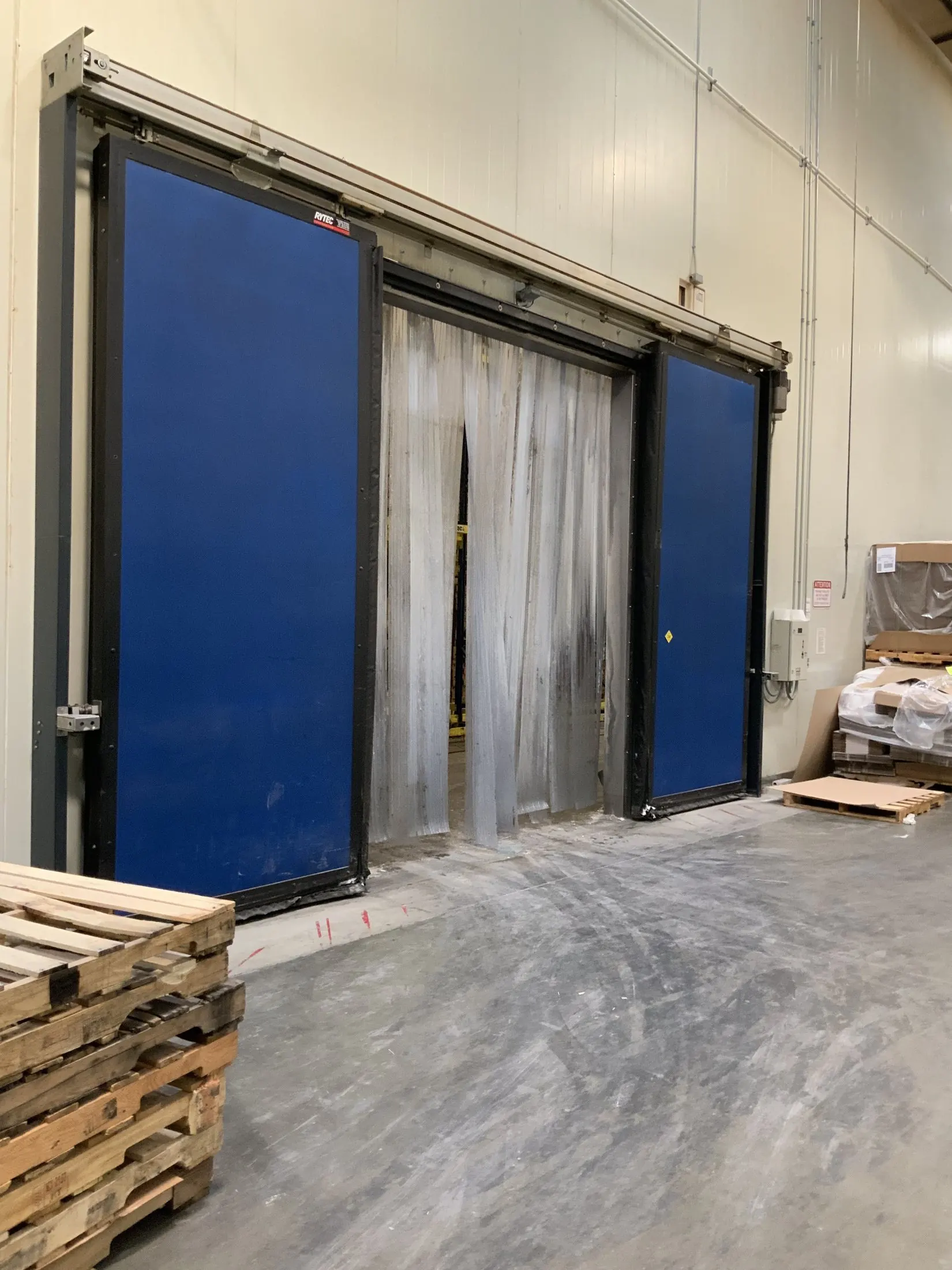
High-speed doors usually exist in facilities where movement, speed, and reliability actually matter. That means when they start failing, the cost is not limited to “the door is acting up.” The cost often shows up in slower flow, repeated interruptions, avoidable delays, and in some environments, problems with internal conditions.
In other words, a high-speed door problem is often an operations problem wearing an equipment label.
Why high-speed door issues matter more than ordinary door issues
High-speed doors are typically used in environments where:
- traffic is frequent
- access speed matters
- downtime spreads quickly
- internal flow depends on reliable cycling
- the facility cannot afford repeated interruptions
That is why high-speed door problems deserve a different level of attention than a lighter-use commercial door issue.
1. High-speed door stuck open
This is one of the clearest operational problems.
A door stuck open can create:
- disrupted internal flow
- security exposure
- environmental instability in sensitive areas
- unnecessary traffic confusion
- avoidable strain on operations
A door that will not close properly is not just annoying. In the wrong environment, it can become expensive fast.
2. Sensor or control failure
If the door is not responding properly, cycling inconsistently, or acting unpredictably, the issue may involve sensors or controls.
What matters operationally is not just the cause. It is the effect:
- unreliable movement
- repeated interruptions
- manual workarounds
- stop-start movement through traffic areas
- avoidable delay in fast-moving environments

3. Curtain damage or impact damage
In higher-traffic settings, impact-related damage is not unusual. But even minor-looking damage can reduce reliability or create repeat stoppages if it is ignored.
The mistake is assuming visible damage is purely cosmetic. In many cases, it becomes a reliability issue long before teams admit it.
4. Slow cycling
A high-speed door that is no longer performing like a high-speed door creates drag even if it technically still works.
Slow cycling can:
- reduce traffic flow
- create back-ups
- slow internal movement
- frustrate operations teams
- signal a door system that is already heading toward larger failure
A slow door in the wrong environment is not a minor issue. It is an early warning.
5. Intermittent failure
Intermittent problems are often handled badly because they give people false confidence.
The usual pattern is:
- the door works sometimes
- the team delays action
- workarounds become normal
- the door fails at the worst possible time
Intermittent issues are dangerous because they make people underestimate the real operational risk.
Why vendor fit matters with high-speed doors
High-speed door needs are often more specialized than they first appear. Facilities dealing with these systems usually need stronger category fit than generic door repair thinking provides.
The wrong fit can mean:
- weak diagnosis
- repeated downtime
- wasted visits
- poor understanding of the facility environment
- slower recovery in operations where speed matters
What to do next
If a high-speed door issue is affecting movement, uptime, or internal conditions, the better move is to get the service path clarified early rather than wait until the failure becomes total.
PrimeSite helps facilities get connected to the right vendor path for high-speed door repair based on the issue, the environment, and the operating pressure involved.