
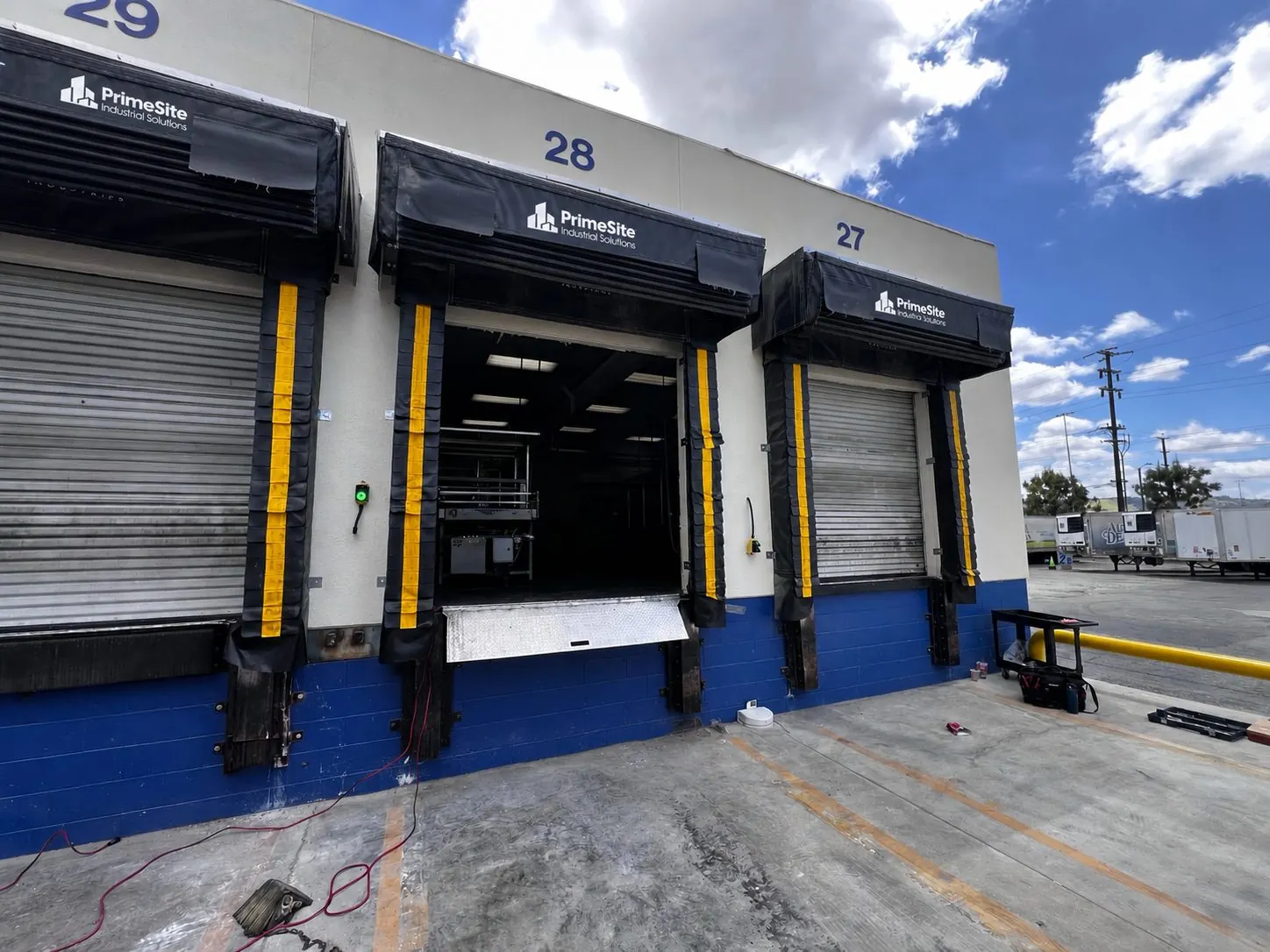
When a dock leveler stops working, the problem is rarely isolated. In an active warehouse, distribution center, or industrial facility, one disabled bay can slow loading flow, create a safety issue, and start affecting the rest of the operation faster than most teams want to admit.
The first priority is not overcomplication. It is getting clear on the immediate risk, containing the disruption, and moving toward the right service path.
Why dock leveler problems matter so quickly
A dock leveler is tied directly to loading activity. When it fails, the issue can affect:
- loading and unloading speed
- trailer access at the bay
- worker safety
- internal scheduling
- yard and dock congestion
- downstream operational flow
That is why dock leveler issues should be treated as operational problems, not just equipment annoyances.
First: make the area safe
If a dock leveler is not operating correctly, do not treat it like a minor inconvenience and keep forcing traffic through the bay.
Start here:
- stop using the affected bay if it is unsafe
- keep forklifts and trailer movement away from the area if the platform is unreliable
- make sure the issue is visible to the team
- prevent informal workarounds that create more risk than the original equipment failure
Trying to push through a dock problem casually is how a repair issue turns into a safety issue.
Second: get clear on what is actually happening
Do not jump straight to conclusions if the only diagnosis is “the dock is down.”
Get basic clarity on what the failure looks like:
- Is the leveler unresponsive?
- Is it moving improperly?
- Is the platform stuck?
- Is there an obvious hydraulic or mechanical issue?
- Is the problem intermittent or fully down?
- Is it affecting one bay or creating a wider dock bottleneck?
You do not need to be the technician. But vague problem reporting slows down the path to the right vendor.
Third: account for the operational impact
A leveler failure matters differently depending on the facility.
Questions worth answering immediately:
- How many active bays are available?
- Is shipping or receiving already being delayed?
- Is this a high-volume period?
- Can traffic be rerouted temporarily?
- Is the failure creating a safety exposure or just a performance problem?
This matters because urgency should be based on real operating conditions, not on vague panic.
Fourth: move toward the right service path
A dock leveler issue is not the time for random vendor guessing.
The better move is to get the need routed correctly based on:
- the equipment issue
- the facility type
- the urgency
- the operating consequences of downtime
PrimeSite helps commercial and industrial facilities get connected to the right vendor path for dock leveler repair when the issue is real and time matters.
Why vendor fit matters with dock leveler repair
Not every provider is equally strong in dock equipment environments.
The wrong fit can mean:
- slower diagnosis
- wasted time
- repeated downtime
- missed safety context
- poor response quality in a loading-intensive environment
Dock problems often look simple from a distance and become expensive when handled badly.
When to seek immediate help
Move quickly when:
- the dock leveler is fully down
- the bay cannot be used safely
- loading operations are being delayed
- the problem is recurring
- the issue is disrupting multiple people or workflows
- the current vendor is unresponsive or clearly not solving the problem