
Facility type
Automotive Dealerships
Vendor support for service bay doors, parts receiving, and dealership vehicle access.
Where downtime affects operations
A bay door that will not open can take a service lane out of rotation. A door that will not close can leave the reception area exposed to weather and disrupt vehicle handoffs.
Common equipment and service needs
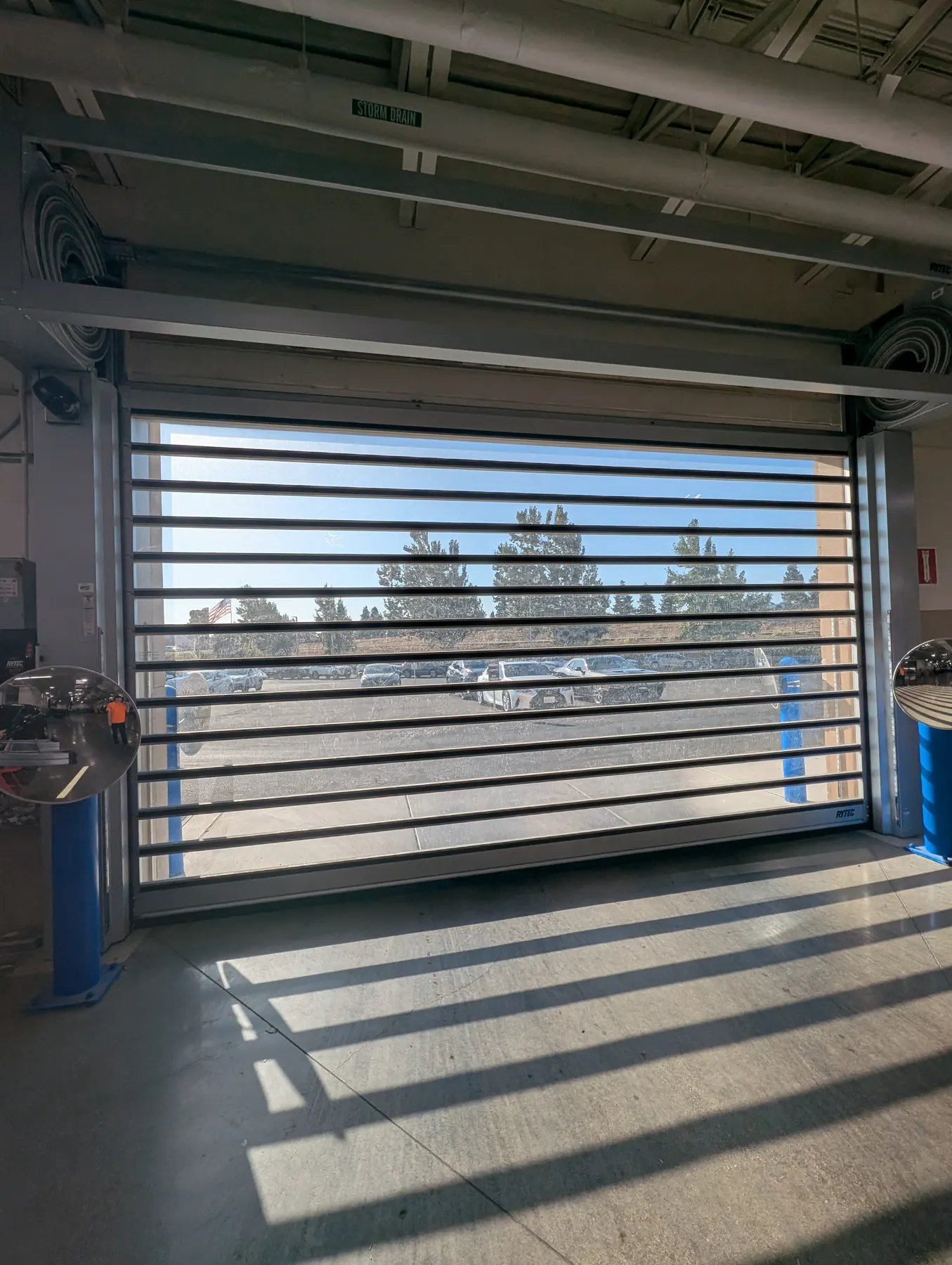
- Overhead and high-speed doors at service bays and delivery lanes
- Receiving doors and dock equipment at parts departments with dedicated loading areas
- Vehicle gates at inventory lots and after-hours entrances

Service drive doors and technician bays have different demands
A dealership service drive is part of the customer arrival experience. An overhead door stuck closed before the morning appointment rush can back up vehicles outside, while a door that will not close exposes the reception lane to weather. Tell the vendor-routing team whether this is a customer entrance, a technician bay, or a vehicle delivery opening.
Technician bays may use full-view sectional doors, commercial overhead doors, or high-speed doors. Report uneven movement, operator faults, repeated stops, or visible damage without attempting to override safety devices. The vendor determines the repair scope and whether the opening can be used safely.
Parts receiving and inventory access
Parts departments with a dedicated receiving bay may depend on dock levelers, overhead doors, and loading equipment. A receiving-door failure after the last delivery has different timing constraints from a blocked service lane during appointments. Include the next delivery window and whether another receiving point is available.
Vehicle gates at inventory lots and after-hours entrances introduce a separate equipment category. Describe whether the gate moves, whether access credentials are recognized, and which entrance is affected. Do not include access codes or other sensitive credentials in the request.
Prepare a clearer dealership service request
For example: the east service-drive door stops halfway, two lanes remain available, and the busiest arrival window is 7 to 9 a.m. Add the equipment make or model if visible, prior service history, and the hours a vendor can access the opening.
For recurring issues, include approximate daily cycling, repeat symptoms, and previous repair notes. PrimeSite can help identify a vendor for a preventative maintenance discussion; the vendor sets the proposed scope, pricing, scheduling, labor, safety, compliance, inspections, and execution.
Frequently asked questions
Common questions
What should a dealership include in a service request?
Identify the affected bay or entrance, whether vehicles can use another lane, and which hours the vendor can access the opening without interrupting service appointments.
Can recurring equipment problems be included in the request?
Yes. Include the affected opening, repeat symptoms, operating hours, and previous service notes. PrimeSite can help identify a vendor for repair or preventative maintenance discussions. The vendor determines the work scope and requirements.
Does PrimeSite perform the repair work directly?
No. PrimeSite does not perform the repair work directly. PrimeSite helps clarify the need and connect the opportunity to a best-fit third-party vendor. The vendor owns pricing, service scope, labor, scheduling, safety, compliance, inspections, and execution.
Related pages
Continue with the most relevant next step
Need help identifying the right vendor?
Vendor support for service bay doors, parts receiving, and dealership vehicle access.