Facility type
Pharmaceutical & Biotech Facilities
Vendor support for controlled-area doors, material transfer openings, and receiving docks.
Where downtime affects operations
A stalled or poorly closing door can interrupt material transfer between rooms. Receiving delays can also affect how materials move from the loading bay into storage or production.
Common equipment and service needs
- High-speed and industrial doors between controlled areas
- Overhead doors, levelers, and related equipment at receiving docks
- Vehicle gates and restricted access points where relevant

Interior material transfer and controlled-area doors
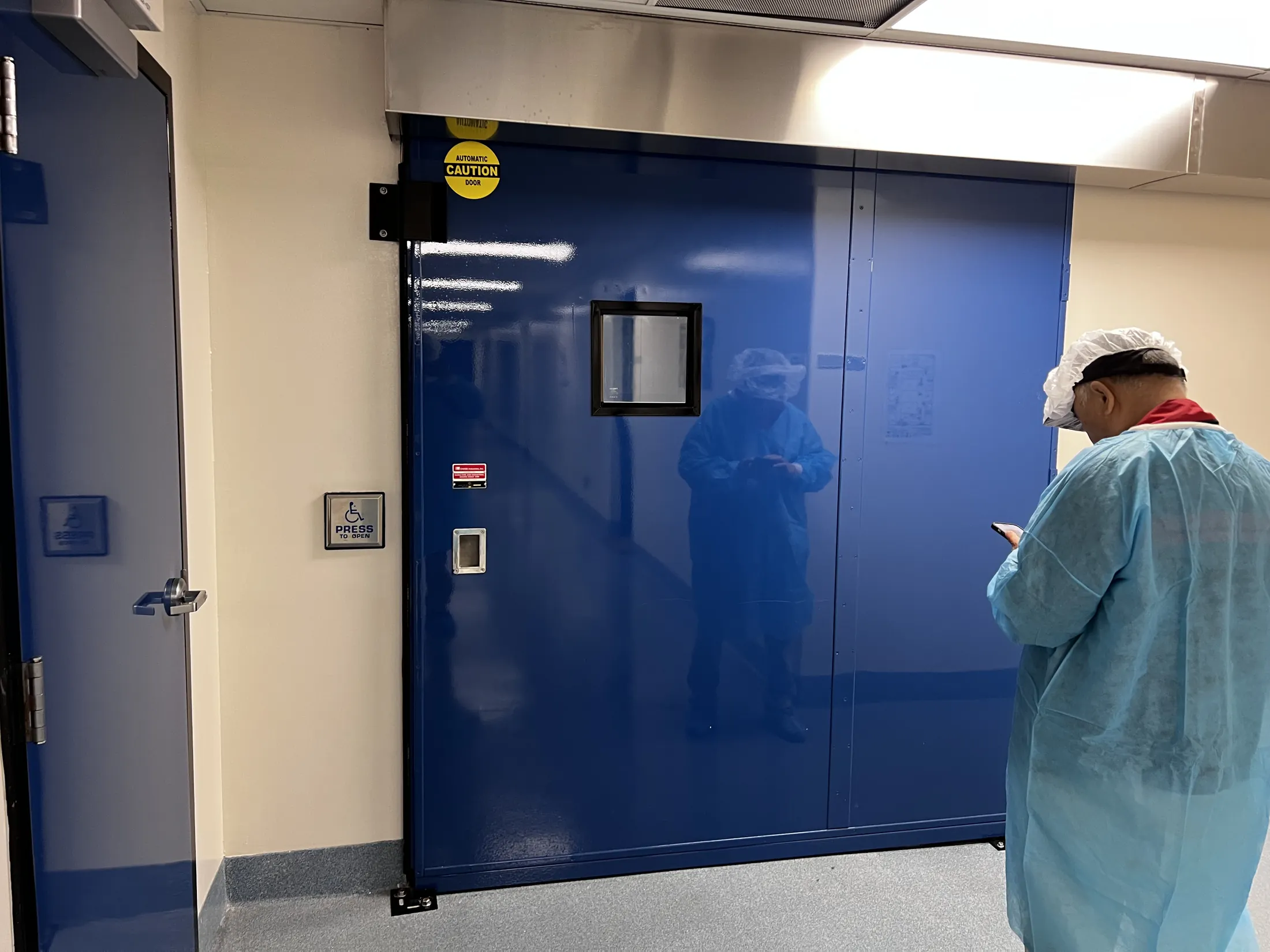
Pharmaceutical and biotech facilities may use high-speed roll-up doors or industrial doors between storage, transfer, and production areas. Not every opening serves a cleanroom. Identify the actual function of the doorway and the facility requirements that apply, rather than assuming the equipment category alone establishes a qualification.
A door that fails to close, repeatedly reverses, or loses its normal control response can interrupt material movement. Report the symptom, the affected rooms or route, and whether an alternate transfer path exists. Facility personnel determine operating restrictions; the vendor evaluates the equipment and proposed work.
Receiving docks are a separate service environment
Exterior receiving doors, dock levelers, and related loading equipment have different demands from interior transfer doors. Include the next scheduled delivery, any unavailable bay, and whether the issue affects unloading or access to storage.
When several equipment types are involved, describe each separately. A leveler fault and a door-control issue may require different vendor capabilities, even when both affect the same receiving bay.
Share site access and qualification requirements early
Include applicable escort or gowning requirements, permitted work windows, documentation requests, and procurement-platform requirements. Do not send confidential process information. PrimeSite can use the stated requirements to help identify a suitable vendor path; it does not certify cleanroom performance, validate processes, or determine regulatory compliance.
For repeat failures, share maintenance records and the observed operating conditions. The facility and vendor determine the applicable qualification and work requirements. The vendor owns pricing, scope, scheduling, labor, safety, compliance, inspections, and execution.
Frequently asked questions
Common questions
Can PrimeSite account for controlled-area access requirements?
Include escort, gowning, work-window, and vendor documentation requirements that your site applies. PrimeSite can factor these into vendor routing. Facility staff and the vendor determine the applicable work and compliance requirements.
Can recurring equipment problems be included in the request?
Yes. Include the affected opening, repeat symptoms, operating hours, and previous service notes. PrimeSite can help identify a vendor for repair or preventative maintenance discussions. The vendor determines the work scope and requirements.
Does PrimeSite perform the repair work directly?
No. PrimeSite does not perform the repair work directly. PrimeSite helps clarify the need and connect the opportunity to a best-fit third-party vendor. The vendor owns pricing, service scope, labor, scheduling, safety, compliance, inspections, and execution.
Related pages
Continue with the most relevant next step
Need help identifying the right vendor?
Vendor support for controlled-area doors, material transfer openings, and receiving docks.