
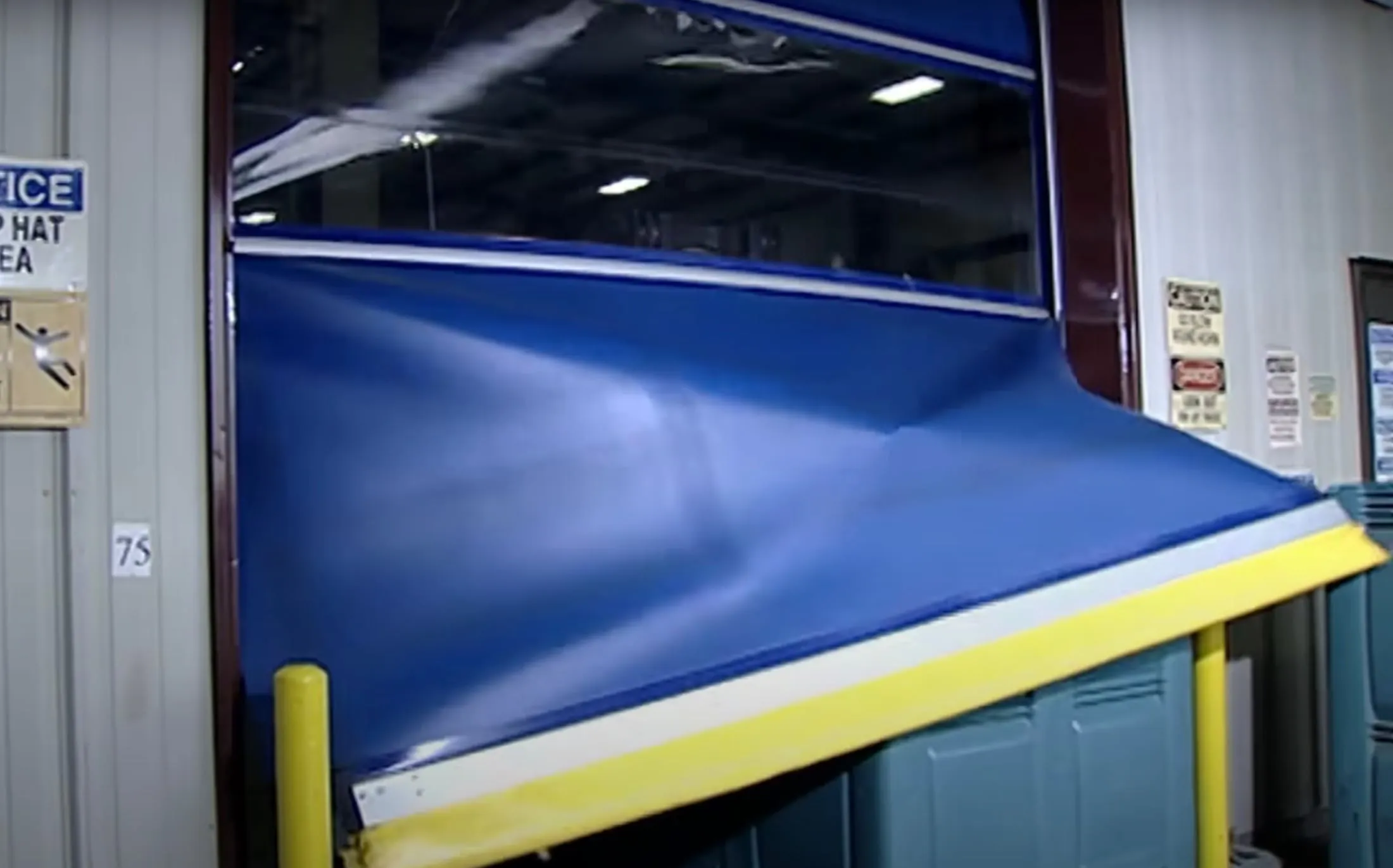
A high-speed door can be an everyday route for forklifts, pallet jacks, and employees. When it is struck, stops cycling, or stays open, the problem can spread beyond the doorway. Traffic may need to move elsewhere, a conditioned space may be exposed, or a production route may slow down.
For Los Angeles County warehouses, food facilities, cold storage operations, and manufacturers, the next step is to describe the condition clearly and make a sound decision about the opening. This guide covers what to watch for, when the situation calls for prompt attention, what a repair evaluation may include, and what information helps a service request move forward.
Why high-speed doors need a different repair approach
High-speed fabric and rigid doors are designed for frequent movement. Depending on the model, they may combine a curtain or panel assembly with guides, a bottom bar, an operator, a controller, activation devices, and safety sensors. A conventional sectional door and a high-speed fabric door can serve the same building, but their failure points and parts needs are not interchangeable.
The operating environment matters as much as the visible symptom. An interior traffic door, an exterior opening, and a cold-room door can have different priorities for access, environmental separation, and restoration. A useful repair request identifies both the equipment and what the door is expected to protect or keep moving.

Start with the condition, not a guessed diagnosis
A door that stops responding does not automatically have a failed motor. A fault can involve the activation device, a safety sensor, the controller, the curtain or bottom bar, or a mechanical condition that prevents normal travel. Record what the door is actually doing before assigning a cause.
Useful observations include whether the door is stuck open or closed, moves partway, reverses, cycles slowly, shows a fault message, or works only intermittently. Note any recent vehicle impact and whether the curtain, guides, or bottom bar look displaced. The existing guide to high-speed door downtime covers those symptom categories in more detail.
When an impact changes the repair question
Some high-speed doors are designed to release or reset after an impact, but that feature is model-specific. A curtain that has left its guides, a skewed bottom bar, a torn panel, or loose hardware should not be treated as an automatic reset job. An impact can affect more than the part that looks out of place.
Rytec advises against resetting a high-performance door when physical damage, loose or broken components, misalignment, or impact damage is visible. Facility teams should follow the equipment instructions and their own safety procedures rather than repeatedly cycling or forcing a damaged opening. A qualified evaluation can determine whether the door can be returned to service, needs replacement parts, or needs a broader repair.
What to do first when the door is unreliable
The immediate goal is to prevent a door problem from becoming a traffic or safety problem. If movement is unpredictable, components are visibly damaged, or the opening cannot be used as intended, keep people and equipment clear and follow the facility's procedure for taking it out of service.
A practical response may include:
- Stop repeated attempts to cycle a visibly damaged door
- Redirect forklifts, deliveries, and pedestrians to an appropriate alternate route
- Protect a temperature-controlled, sanitary, or secured area if the door is stuck open
- Record the door number, current position, visible damage, and any displayed fault
- Tell the facility team which opening is unavailable and how traffic should move around it
Do not bypass a safety device or reach into the curtain, guides, operator, or electrical equipment to keep the door moving. The service scope should be established with the condition and site procedures in view.
How urgent is high-speed door repair?
Urgency is a combination of safety, the door's condition, and what happens when the opening is unavailable. Prompt attention is especially important when:
- The door moves unpredictably, reverses without a clear reason, or has visible impact damage
- The opening cannot be secured or is exposing a conditioned or sensitive area
- A critical production, shipping, or receiving route has no workable alternate
- The door's failure is interrupting forklift or pedestrian flow
- An intermittent fault is recurring or getting worse
If the facility can safely isolate the opening and use another route, there may be more flexibility in scheduling. The underlying fault still deserves evaluation before the door returns to normal use.
What to document before requesting service
A clear request helps identify the right high-speed door category and the conditions a service visit must account for. Gather what can be observed safely:
- Facility address, door number, and the best on-site contact
- Manufacturer, model, and serial number if the label is readily accessible
- Wide photographs of the full opening and close photographs of visible damage
- Any controller fault message and the behavior immediately before the failure
- Whether the door is open, closed, isolated, or intermittently working
- How the problem affects traffic, temperature, security, sanitation, or production
- Known impact or repair history, available alternate routes, and access restrictions
Do not enter a hazardous area or operate the door just to obtain a better picture. Existing photos, a short video captured from a safe position, and a precise symptom description are more useful than a speculative diagnosis.
What an evaluation and repair may involve
The repair scope depends on the door and the fault. An evaluation may need to consider the curtain or rigid panels, bottom bar, side guides, operator and drive, controller, activation devices, safety sensors, seals, and the surrounding opening. A door with impact damage may also need an operational check after visible parts are corrected.
Some conditions are localized; others involve related components. A damaged curtain may be the visible problem while a guide or bottom-bar assembly also needs attention. A repeated fault message may involve a sensor or control issue rather than the door fabric. The goal is a reliable, appropriately functioning opening, not simply clearing a fault for one cycle.
What affects high-speed door repair cost in Los Angeles?
A useful price cannot be taken from a generic web range. An isolated sensor issue and a damaged curtain assembly require different parts, labor, access, and testing. The main variables include door type and size, the extent of damage, model-specific parts availability, controls or operator involvement, working height, and any site restrictions.
Los Angeles County facilities may also have narrow service windows, secured access, active shifts, or cold-room and sanitation requirements. Share those conditions before a quote is prepared. They help define what the work needs to include and when the opening can be made available.
Repair, replace, or address a recurring pattern?
Repair may make sense when the fault is localized, the door remains sound, parts are available, and the restored system still suits the traffic and environmental need. Replacement becomes a more serious option when damage is widespread, parts are difficult to source, failures keep recurring, or the existing door is poorly matched to its daily use.
A door that is repeatedly struck may need more than another curtain repair. Traffic flow, activation settings, visibility, protective barriers, and the opening's suitability for the equipment moving through it may all deserve review. The decision should reflect the facility's long-term operating cost, not only the next invoice.
Keep high-cycle doors from becoming repeat emergencies
High-speed doors can accumulate substantial use in a busy facility. Regular condition checks and a maintenance plan can help identify wear, sensor or activation problems, and developing damage before the opening becomes unreliable. The appropriate schedule depends on door model, cycle volume, environment, and history.
Keep a record by door number so recurring faults and impact locations are easy to spot. That history also helps distinguish an isolated repair from a larger equipment or traffic-flow problem.